

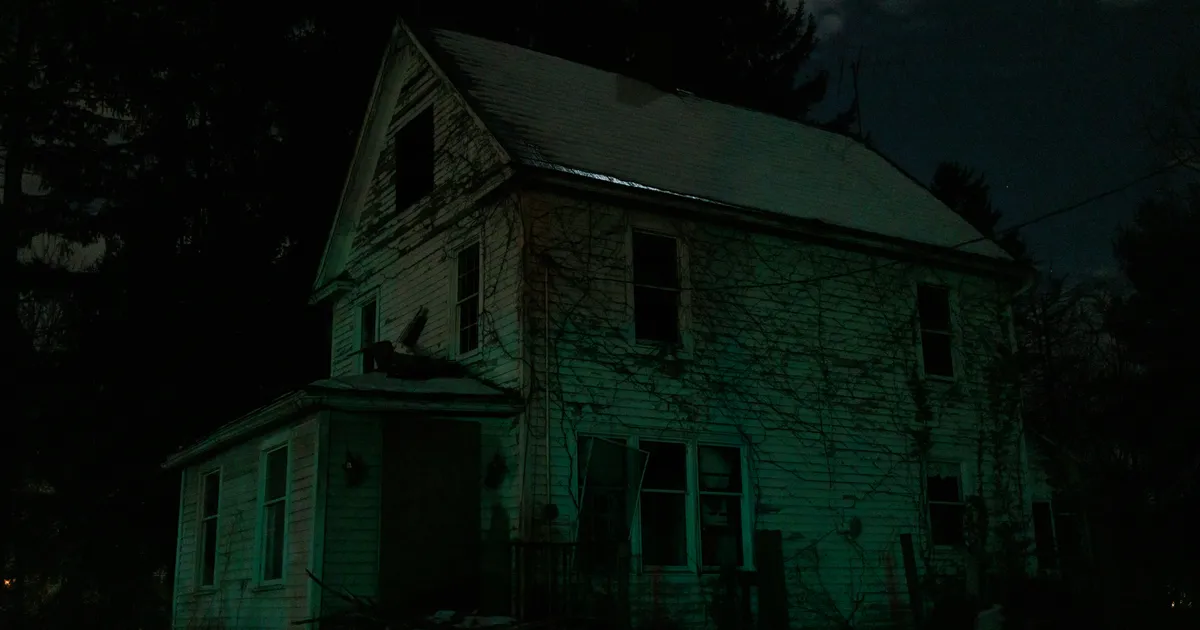
The chilling whisper of a cold spot, the fleeting shadow caught in peripheral vision, the unsettling creak from an empty attic – these are the hallmarks of a ghost sighting, experiences that have fascinated and terrified humanity for millennia. I’ve personally walked through countless “haunted” locations, from ancient castles to abandoned asylums, always searching for the elusive proof, the undeniable phenomenon. What I’ve consistently found, however, is a fascinating tapestry woven from psychology, perception, and often, plain old physics. The truth behind haunted houses and ghost sightings, it turns out, is far more intricate and human than many imagine, and unraveling it offers a profound understanding of ourselves.
The Psychology of Perception
Our brains are magnificent pattern-recognition machines, constantly trying to make sense of the world around us. This incredible ability, however, comes with a fascinating drawback: sometimes, we see patterns where none exist. In a dimly lit, unfamiliar environment, our senses are heightened, and our minds are primed to detect threats. A creaking floorboard becomes a footstep, a gust of wind rattling a window morphs into a spectral whisper. This phenomenon, known as pareidolia, is why we see faces in clouds or hear voices in static – our brains are simply working overtime to find meaning.
Expectation plays an enormous role in what we perceive. If you enter a building with a reputation for being haunted, your mind is already prepped to find evidence. Every shadow, every sound, every unexplained sensation is filtered through that lens of expectation. This isn’t a sign of weakness; it’s a fundamental aspect of human cognition. Our beliefs and prior knowledge profoundly influence our sensory experiences, making it incredibly difficult to objectively assess anomalous events in places we already believe to be supernatural. This bias can be surprisingly powerful, even for the most skeptical among us.
Understanding Confirmation Bias
Confirmation bias is a cognitive shortcut where we seek out, interpret, and remember information in a way that confirms our pre-existing beliefs or hypotheses. When visiting a supposed haunted location, if you believe in ghosts, you’re more likely to interpret ambiguous events (like a sudden temperature drop or a flickering light) as paranormal activity. Conversely, if you’re a skeptic, you’ll actively look for mundane explanations. This bias can make objective investigation incredibly challenging, as it subtly steers our interpretations towards what we already expect to find, reinforcing our initial stance rather than challenging it with new data.
Environmental Factors and Sensory Deception
Many “haunted” phenomena have surprisingly mundane explanations rooted in environmental conditions. Old houses, by their very nature, are full of unsettling sounds: groaning pipes, shifting foundations, drafts whistling through cracks, and even vermin scurrying within walls. Infrasound, low-frequency sound waves below the range of human hearing, can also induce feelings of unease, anxiety, or even the sensation of a “presence” without conscious awareness of the sound source. These subtle, often imperceptible stimuli can have a profound impact on our psychological and physiological state.
Temperature fluctuations are another common element reported in haunted locales. Cold spots can be attributed to drafts, poor insulation, or even convection currents within a room. Electromagnetic fields, often generated by faulty wiring, appliances, or even natural geological phenomena, have been theorized to cause feelings of disorientation, paranoia, or the sensation of being watched. While the scientific community remains cautious about a direct link between EMFs and ghost sightings, it’s undeniable that these environmental peculiarities can contribute significantly to an eerie atmosphere, feeding into the narrative of a supernatural presence.
The Power of Suggestion and Storytelling
Human beings are natural storytellers, and tales of the supernatural are among our oldest narratives. These stories, passed down through generations, imbue certain locations with an aura of mystery and dread. When you visit a place with a well-known ghost story, the narrative itself becomes a powerful form of suggestion. Your mind is already prepared to find evidence of the haunting, making you more susceptible to interpreting ambiguous stimuli as paranormal. This collective belief and shared cultural understanding significantly amplify the perceived “hauntedness” of a site.
The entertainment industry has also played a significant role in shaping our perceptions of haunted houses and ghost sightings. Movies, TV shows, and even theme park attractions often sensationalize paranormal phenomena, creating a compelling but often unrealistic portrayal of what a haunting entails. This constant exposure to dramatized versions of ghost stories can blur the lines between fiction and reality, leading people to expect dramatic manifestations rather than subtle, often ambiguous experiences. By 2026, the lines between immersive entertainment and alleged paranormal investigation will likely be even more intertwined.
Historical Hoaxes and Modern Misinterpretations
Throughout history, countless individuals have capitalized on people’s belief in the supernatural for fame, fortune, or simply mischief. From the Fox Sisters in the 19th century, whose “spirit rappings” launched the Spiritualism movement (and were later exposed as hoaxes), to modern-day viral videos that are meticulously staged, deliberate deception is a recurring theme in the history of ghost sightings. It’s a sobering reminder that not every anomaly is unexplained; sometimes, it’s simply a clever trick designed to elicit a reaction.
Beyond outright hoaxes, many alleged ghost sightings can be attributed to misinterpretations of everyday phenomena. Distorted reflections, unusual light refractions, sleep paralysis, or even carbon monoxide poisoning (which can cause vivid hallucinations) have all been mistaken for paranormal activity. Investigating these claims often reveals a perfectly rational, albeit sometimes unsettling, explanation. It takes a disciplined, critical approach to sift through the genuine human experiences and separate them from the more mundane, often overlooked, causes. The internet, while connecting us, also amplifies the spread of unverified claims, making critical thinking more vital than ever.
The Enduring Appeal of the Unknown
Despite centuries of scientific inquiry and countless debunkings, the allure of ghost stories and haunted places persists. This isn’t necessarily a failure of reason; it speaks to a fundamental human desire to understand what lies beyond our current comprehension. The unknown sparks our curiosity, challenges our assumptions, and offers a sense of wonder in a world that can sometimes feel overly rationalized. It’s a space where mystery thrives, allowing us to contemplate profound questions about life, death, and consciousness.
For many, the belief in ghosts offers comfort, a connection to loved ones lost, or a sense of continuity beyond physical existence. For others, it’s the thrill of fear, the adrenaline rush of confronting the seemingly impossible from a safe distance. This deeply personal and often emotional connection to the supernatural ensures that the truth behind haunted houses and ghost sightings will continue to be a topic of passionate debate and exploration well into 2026 and beyond. It’s a reflection of our collective yearning for meaning in the face of life’s greatest mysteries. For further reading, consider exploring resources like Skeptical Inquirer, which offers critical analyses of paranormal claims.
Key Takeaways
- Most alleged paranormal activity can be attributed to psychological factors like pareidolia, confirmation bias, and the power of suggestion, where our brains interpret ambiguous stimuli based on expectations.
- Environmental conditions, such as infrasound, drafts, electromagnetic fields, and the natural sounds of old buildings, often create an unsettling atmosphere mistaken for supernatural phenomena.
- The human tendency for storytelling, historical hoaxes, and deliberate misinterpretations contribute significantly to the enduring lore of haunted places, often blurring the lines between fact and fiction.
- Our deep-seated desire to explore the unknown and find meaning beyond conventional understanding fuels the continued fascination with ghost sightings, regardless of scientific explanations.
Frequently Asked Questions
Can scientific equipment detect ghosts?
While various tools like EMF detectors, thermal cameras, and EVP recorders are used by paranormal investigators, there is currently no scientific consensus that these devices can reliably detect or prove the existence of ghosts. Their readings often have mundane explanations, and the interpretation of data remains highly subjective. Reputable scientific bodies do not endorse these methods for paranormal detection.
Are cold spots proof of a haunting?
Not necessarily. Cold spots are frequently reported in haunted locations, but they can be attributed to a range of natural phenomena. These include drafts from poorly sealed windows or doors, uneven insulation, convection currents within a room, or even the localized effect of evaporation. While unsettling, a sudden drop in temperature alone is not definitive proof of a supernatural presence. Understanding basic thermodynamics helps demystify many such occurrences.
Why do some people see ghosts more than others?
Differences in perception can be attributed to a combination of psychological, physiological, and cultural factors. Individuals prone to vivid imaginations, strong beliefs in the supernatural, or those experiencing heightened emotional states might be more susceptible to interpreting ambiguous stimuli as paranormal. Sleep paralysis, a temporary inability to move or speak upon waking, is also a common cause of perceived spectral visions, as detailed by institutions like The Sleep Foundation.
What about undeniable personal experiences?
Personal experiences are incredibly powerful and shouldn’t be dismissed lightly. However, the human brain is remarkably adept at creating compelling narratives and experiences, especially under stress, fear, or strong emotional influence. While a personal experience feels undeniable to the individual, it doesn’t automatically translate to objective evidence of the supernatural. Factors like memory recall, subconscious interpretation, and even subtle environmental cues can shape these experiences in profound ways.
Conclusion
The truth behind haunted houses and ghost sightings is rarely a simple case of spectral apparitions. Instead, it’s a rich tapestry woven from human psychology, environmental factors, cultural narratives, and our enduring fascination with the unknown. By understanding the rational explanations, we don’t diminish the wonder, but rather gain a deeper appreciation for the complexities of human perception and the powerful stories we tell ourselves. The mystery persists, not in the supernatural, but in the fascinating workings of our own minds and the world around us.