

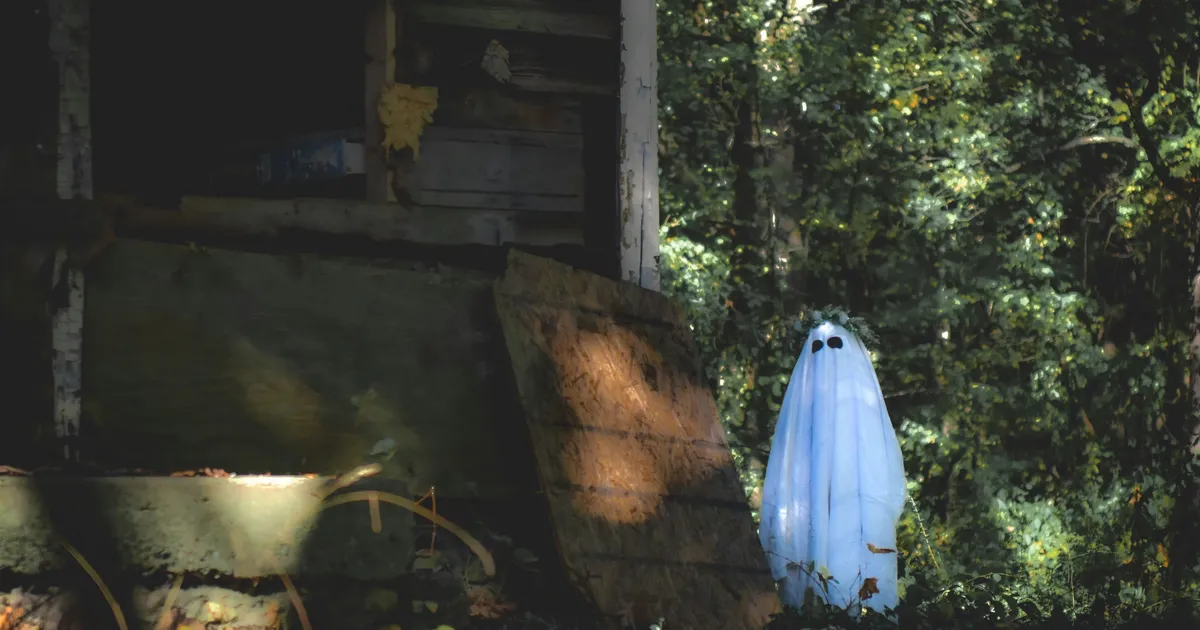
I once spent a night in a supposedly haunted Victorian mansion for a research project, fully expecting to debunk everything. Around 3 AM, a distinct, chilling whisper seemed to brush my ear, followed by a sudden, inexplicable drop in temperature. My heart pounded, and for a fleeting moment, every rational fiber in my being wanted to believe. Yet, after reviewing my notes and environmental readings, the “whisper” was likely a combination of an old pipe rattling and my own heightened anticipation, while the cold spot correlated with a draft from a poorly sealed window. This experience perfectly encapsulates why understanding real ghost stories explained with logical reasoning is so compelling. It’s not about dismissing genuine human experiences, but about exploring the fascinating interplay between our perception, psychology, and the environment around us.
The Psychology of Perception
Our brains are incredible pattern-matching machines, constantly trying to make sense of the world, sometimes even creating patterns where none exist. This phenomenon, known as pareidolia, is why we see faces in clouds or hear voices in static. When encountering ambiguous stimuli in a dark, old house—a creaking floorboard, a shifting shadow—our minds, especially if predisposed to belief, can easily interpret these as paranormal. Confirmation bias further strengthens these beliefs, as we tend to seek out and remember information that supports our existing views, overlooking contradictory evidence.
Furthermore, the power of suggestion plays a significant role. If we enter a location with a reputation for being haunted, our senses become hyper-alert, and our expectations prime us to interpret ordinary events as extraordinary. This psychological priming can lead to vivid sensory experiences, from feeling a “presence” to hearing whispers, simply because our brains are actively anticipating them. The human mind is a complex filter, and sometimes, the filter adds more than it removes, especially when fear or excitement is involved, shaping our reality in profound ways.
Environmental Factors and Sensory Deception
Many seemingly supernatural occurrences can be traced back to subtle, yet powerful, environmental factors. Infrasound, for instance, is a low-frequency sound that is often inaudible to the human ear but can cause feelings of unease, anxiety, or even visual distortions in some individuals. Research has shown that exposure to specific infrasound frequencies can induce shivers, a sense of dread, and the feeling of being watched, perfectly mimicking classic ghostly encounters. For more on this, you might explore studies published on the effects of infrasound on human perception. In 2026, our understanding of these subtle environmental influences continues to grow, offering clearer explanations.
Other environmental culprits include fluctuating electromagnetic fields (EMFs), which some studies suggest can influence brain activity and induce strange sensations, and even carbon monoxide poisoning. The latter, often associated with faulty heating systems, can cause hallucinations, disorientation, and a feeling of impending doom, all symptoms frequently reported in “haunted” locations. Old buildings, with their drafts, fluctuating temperatures, and unique acoustic properties, are often ripe environments for these subtle sensory deceptions, providing ample fodder for what might seem like genuine paranormal activity to an unsuspecting observer.
Sleep Phenomena and Hypnagogia
Many terrifying “ghost” encounters actually occur during the liminal state between wakefulness and sleep. Sleep paralysis is a prime example, where an individual awakens but is temporarily unable to move or speak, often accompanied by vivid, terrifying hallucinations. These apparitions can take the form of shadowy figures, menacing presences, or even feeling a weight on one’s chest, experiences almost universally described across cultures as demonic or ghostly. The brain is awake enough to be aware, but still caught in the dream state’s vivid imagery, making the experience incredibly real and frightening.
Similarly, hypnagogic and hypnopompic hallucinations, which occur just as one is falling asleep or waking up, respectively, can be incredibly realistic. People might see spiders crawling on the walls, hear voices, or feel touches that aren’t there. These phenomena are entirely natural physiological occurrences, yet their intensity and realism lead many to believe they’ve had a brush with the supernatural. Understanding these common sleep disorders and transitional states is crucial for anyone trying to logically explain what feels like a paranormal experience, providing comfort in scientific understanding rather than fear.
The Power of Suggestion
Our brains are highly susceptible to suggestion, especially when combined with pre-existing beliefs or cultural narratives. If we are told a specific room is haunted, our minds become primed to interpret any unusual sound or shadow as evidence of a ghost. This isn’t a sign of weakness; it’s a fundamental aspect of how human perception works. The collective belief in a haunting, passed down through generations or amplified by media, can create a powerful psychological feedback loop, where each new visitor “experiences” what they expect to experience, reinforcing the myth.
This phenomenon is particularly strong in group settings. When people share an experience in a supposedly haunted location, their interpretations can influence one another, leading to a shared, reinforced conviction of paranormal activity. What might start as a simple creak or draft can, through collective suggestion and heightened emotional states, quickly escalate into a full-blown “ghost sighting.” This illustrates how powerful our minds are in constructing reality, often blending objective facts with subjective interpretations influenced by social and cultural factors.
Misinterpretation of Natural Events
The world around us is full of natural phenomena that can easily be mistaken for paranormal activity, especially in old buildings or during quiet hours. Unexplained noises, for instance, are often the result of a house settling, pipes expanding and contracting, rodents scurrying within walls, or even tree branches scraping against windows. Sudden drafts or temperature drops can be attributed to faulty insulation, open flues, or air currents moving through old structures. These mundane explanations, while less dramatic, are far more common than any supernatural cause.
Visual anomalies, such as fleeting shadows or glints of light, can often be explained by reflections from outside, changes in ambient light, or even floaters in one’s own eye. The human visual system is incredibly adept at pattern recognition, but also prone to optical illusions and misinterpretations, especially in low light conditions where details are scarce. What appears to be a figure in the periphery might simply be a coat on a chair, transformed by our brain’s tendency to fill in gaps and create familiar shapes from ambiguous input. For more on optical illusions, consider resources like those from the Exploratorium.
Cultural Narratives and Collective Belief
Ghost stories are deeply embedded in human culture, spanning centuries and continents. These narratives serve various purposes, from explaining the inexplicable to offering comfort about life after death, or even instilling moral lessons. This rich tapestry of folklore and belief means that when an ambiguous event occurs, many individuals are already equipped with a cultural framework to interpret it as a ghostly encounter. From ancient myths to modern horror films, the idea of spectral entities is constantly reinforced, shaping our collective understanding of the unknown.
The persistence of these beliefs is often due to their emotional resonance and the comfort they can provide, even if it’s the comfort of a shared fear. In an increasingly rationalized world, the allure of the supernatural offers a sense of wonder and mystery. These stories are passed down, evolving with each telling, and continue to influence how we perceive and react to unexplained phenomena. By 2026, while scientific understanding progresses, the human fascination with the unknown and the stories we tell about it will undoubtedly endure, reflecting our deep-seated need for meaning and connection beyond the tangible.
Key Takeaways
- Cognitive Biases Shape Perception: Our brains are wired to find patterns and confirm existing beliefs, often interpreting ambiguous stimuli (like shadows or sounds) as paranormal due to pareidolia and confirmation bias.
- Environmental Factors Influence Experiences: Infrasound, electromagnetic fields, and even carbon monoxide can induce physical and psychological sensations—from unease to hallucinations—that are commonly mistaken for ghostly encounters.
- Sleep Phenomena Mimic Hauntings: Sleep paralysis and hypnagogic/hypnopompic hallucinations are vivid, realistic experiences occurring at the edge of sleep, frequently leading individuals to believe they’ve encountered spirits.
- Cultural Narratives Reinforce Beliefs: Long-standing ghost stories and collective belief systems provide a framework for interpreting unexplained events, often shaping individual experiences and perpetuating supernatural explanations.
Frequently Asked Questions
Can scientific instruments detect ghosts?
While various instruments like EMF meters and thermal cameras are used by paranormal investigators, there’s no scientific consensus that these devices have ever detected a ghost. Their readings can often be attributed to mundane environmental factors or technical anomalies, rather than evidence of spirits.
Why do so many people report similar ghost experiences?
Similar experiences often stem from shared psychological phenomena, common environmental factors, and widespread cultural narratives. The human brain, facing similar ambiguous situations, tends to respond in predictable ways, leading to shared interpretations, especially when influenced by popular ghost lore.
Is there any logical explanation for cold spots?
Yes, cold spots are frequently explained by natural phenomena such as drafts from poorly sealed windows or doors, inefficient insulation, uneven heating systems, or even the movement of cold air pockets within a room. These temperature variations are often more noticeable in older buildings.
How do I tell if my experience was a ghost or something else?
To logically assess an experience, consider environmental factors (drafts, sounds from pipes, EMFs), psychological states (stress, sleep deprivation, expectation), and cognitive biases. Documenting the precise conditions and seeking mundane explanations first can often demystify seemingly supernatural occurrences.
Conclusion
Exploring real ghost stories explained with logical reasoning isn’t about discrediting personal experiences, but about empowering ourselves with knowledge. It’s about appreciating the incredible complexity of the human mind and its interaction with the environment. By understanding the psychological, environmental, and physiological factors at play, we can transform fear of the unknown into a fascinating journey of discovery. The world is full of wonders that don’t require supernatural explanations to be awe-inspiring or profoundly impactful. Critical thinking allows us to appreciate reality in an even deeper, more nuanced way.