

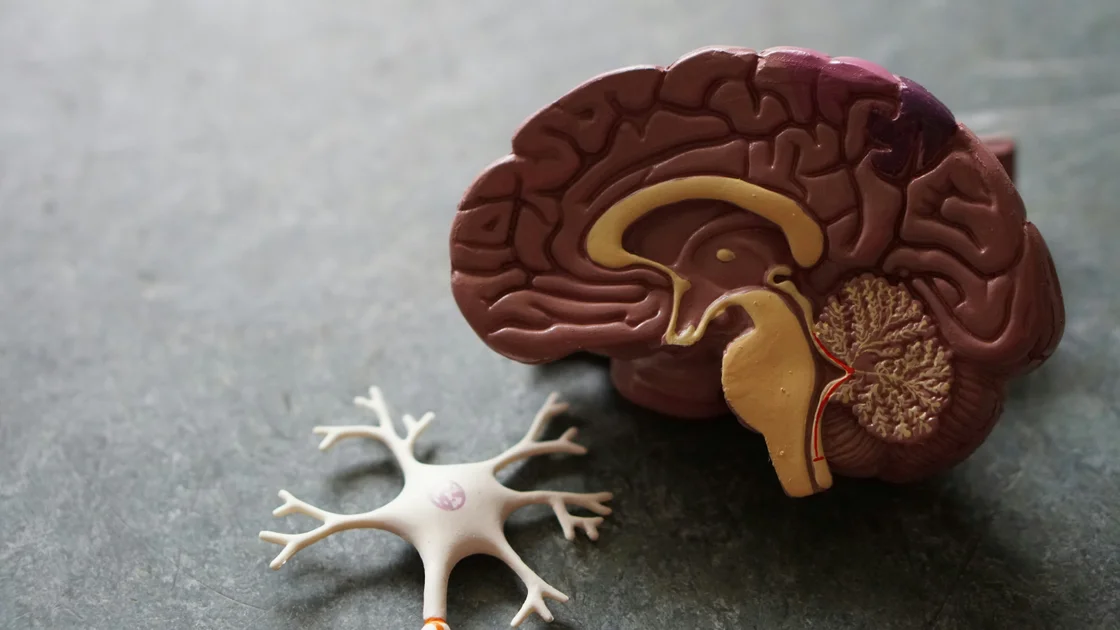
The role of cognitive bias in how we process information explains why our brains actively ignore factual scientific data even when presented with overwhelming evidence. As we navigate the complex information landscape of 2026, the human mind remains fundamentally wired for survival rather than raw data optimization. Evolutionary psychology suggests that our ancestors prioritized rapid, heuristic-based decision-making to avoid immediate threats, a trait that now manifests as a barrier to objective reasoning in the digital age. When confronted with scientific findings that challenge deeply held worldviews, the brain often perceives this information as a direct threat to the self, triggering defensive psychological mechanisms. Understanding these biases is not merely an academic exercise; it is an essential competency for anyone seeking to make informed decisions in a world saturated with misinformation and conflicting narratives.
The Evolutionary Roots of Bias
Our cognitive architecture was forged in environments where split-second judgments were the difference between life and death. In those contexts, deep analytical processing of every available data point was inefficient and potentially dangerous. The brain evolved to rely on mental shortcuts, known as heuristics, which favor speed over perfect accuracy. In 2026, these same mechanisms persist, causing us to favor familiar patterns and preexisting knowledge over new, complex scientific data. This is not a failure of intelligence but a byproduct of a biological system designed for conservation of energy and social cohesion within small tribal groups.
Modern neuroscience highlights that the brain consumes significant metabolic energy when engaging in high-level analytical thinking. To preserve resources, the mind defaults to automatic processing whenever possible. When scientific data contradicts our existing mental models, the brain experiences a state of cognitive dissonance, which generates genuine physical discomfort. To alleviate this tension, we unconsciously filter out the inconvenient facts while magnifying information that supports our established beliefs. This process, often referred to as motivated reasoning, ensures that our internal worldview remains stable, even if it becomes increasingly detached from the empirical reality observed by the global scientific community.
Confirmation Bias and Data Filtering
Confirmation bias serves as the most prominent filter through which we view the world. It is the tendency to search for, interpret, and recall information in a way that confirms our prior hypotheses. When presented with a graph or a peer-reviewed study, we rarely approach it as a blank slate. Instead, we perform a rapid diagnostic check to see if the data aligns with our social and political identity. If it aligns, we accept it with little scrutiny; if it contradicts, we subject it to a grueling standard of evidence that we rarely apply to our preferred beliefs. This dynamic is exacerbated by algorithmic social media feeds that reinforce these cycles.
The social media landscape of 2026 has effectively automated the process of confirmation bias. By presenting users with curated content that mirrors their existing preferences, platforms have created echo chambers where dissenting scientific data is rarely encountered, let alone processed. When such data does break through, the brain is already primed to reject it as biased or irrelevant. To break this cycle, one must practice meta-cognition—the ability to think about one’s own thinking. Recognizing that your immediate emotional reaction to a scientific claim is often a result of bias rather than an assessment of validity is the first step toward reclaiming cognitive autonomy.
The Dunning-Kruger Effect
Understanding the Confidence Gap
The Dunning-Kruger effect describes a cognitive bias where individuals with limited knowledge in a domain overestimate their own competence. This phenomenon is particularly dangerous in the age of democratized information. A person might spend an hour reading blog posts on a complex topic like climate modeling or immunology and suddenly feel qualified to debate experts with decades of specialized training. Because they lack the foundational knowledge to understand what they do not know, they remain blind to the nuances and caveats that define genuine scientific expertise.
This overconfidence creates a barrier to learning that is difficult to penetrate. When a person believes they have mastered a subject, they lose the intellectual humility required to incorporate new, factual scientific data. In 2026, the proliferation of generative AI tools has made it easier than ever to synthesize plausible-sounding arguments, further fueling this illusion of competence. Experts, by contrast, often underestimate their knowledge, a phenomenon known as the impostor syndrome, which leads them to hedge their conclusions. This creates a public perception mismatch where the confident but uninformed are often perceived as more authoritative than the cautious, evidence-based scientist.
Comparison of Cognitive Mechanisms
| Feature | Heuristic Processing | Analytical Reasoning | System 1 vs System 2 |
|---|---|---|---|
| Speed | Instantaneous | Slow and deliberate | System 1 is rapid |
| Energy Cost | Low metabolic load | High metabolic load | System 2 consumes more |
| Accuracy | Prone to error | High precision | Context dependent |
| Bias Susceptibility | Extremely high | Low | System 1 is biased |
| Primary Goal | Survival/Efficiency | Truth/Precision | Goal orientation |
| Context | Reactive social settings | Scientific inquiry | Environmental fit |
Pros and Cons Analysis
The reliance on cognitive biases provides clear benefits in terms of social functioning and efficiency. By instinctively aligning with the views of our peer groups, we foster social cohesion and reduce the friction of daily interpersonal interactions. These shortcuts allow us to navigate high-stress environments where we cannot possibly process every variable manually. However, the drawbacks are substantial, particularly regarding scientific literacy. By insulating ourselves from uncomfortable truths, we risk making decisions that are disastrous for our long-term health, financial security, and societal well-being. The cost of convenience is often the loss of objective truth.
The pros of these biases include rapid decision-making, reduced cognitive fatigue, and increased psychological comfort within social tribes. Conversely, the cons include the erosion of critical thinking skills, increased susceptibility to manipulation, and the rejection of life-saving scientific interventions. While we cannot fully eliminate these biases, we can mitigate their impact through education and exposure to diverse perspectives. Developing a habit of questioning one’s own initial reactions to data is a vital skill. Ultimately, the goal is to balance the need for social belonging with the intellectual responsibility to engage with the world as it actually exists, rather than as we wish it to be.
Motivated Reasoning and Identity
Scientific data is rarely just data; it is often perceived as an attack on one’s identity. If a group defines itself by a specific skepticism toward institutional science, then accepting a scientific fact feels like a betrayal of the tribe. This is why factual correction is often ineffective; it treats a social problem as an information problem. If you tell someone they are wrong based on data, you are not just correcting their facts, you are telling them that their community is wrong. This triggers a fight-or-flight response, causing the subject to dig in their heels further, a phenomenon known as the backfire effect.
To communicate scientific facts effectively, one must separate the data from the identity. Research from institutions like the Nature Portfolio suggests that framing scientific information in a way that respects the values of the audience is far more successful than aggressive fact-checking. By finding common ground and acknowledging the complexity of the issue, communicators can bypass the defensive walls built by motivated reasoning. In 2026, the challenge lies in fostering a culture where changing one’s mind based on new evidence is viewed as a sign of strength and intellectual integrity rather than a sign of weakness or social betrayal.
The Future of Truth
As we move deeper into the decade, the integration of advanced technology into our daily lives will only amplify these cognitive vulnerabilities. The rise of deepfakes and hyper-personalized content streams means that our biases will be exploited with unprecedented precision. Protecting the integrity of scientific discourse requires a multi-pronged approach: improving digital literacy, fostering emotional regulation, and incentivizing platforms to prioritize accuracy over engagement. We must learn to view our biases not as permanent features of our personality, but as temporary states that we can learn to observe and manage with deliberate effort.
Ultimately, the role of cognitive bias in why our brains ignore factual scientific data is a testament to the persistent influence of our evolutionary past. However, we are not helpless victims of our biology. By cultivating a meta-cognitive awareness of our tendencies, we can create a buffer between our initial emotional response and our final judgment. The pursuit of scientific truth is inherently uncomfortable because it requires us to constantly update our maps of the world. Embracing this discomfort is the hallmark of a mature mind and the only path forward for a society that relies on data to solve its most pressing global challenges.
Key Takeaways
- Cognitive biases are evolutionary shortcuts designed for survival, not for processing complex modern data.
- Confirmation bias causes us to filter out facts that challenge our identity or deeply held worldviews.
- The Dunning-Kruger effect creates a barrier where limited knowledge leads to overconfidence and rejection of expertise.
- Motivated reasoning turns scientific disagreement into a perceived attack on one’s social tribe.
- Developing meta-cognition is the most effective way to identify and mitigate the influence of automatic biases.
- Communication strategies that respect audience values are more effective than direct confrontation with facts.
Frequently Asked Questions
Why does the brain reject science?
The brain rejects science when it perceives new data as a threat to existing beliefs or social identity, triggering a protective response to maintain internal consistency.
Can we eliminate cognitive bias?
We cannot fully eliminate biases because they are hardwired into our cognitive architecture, but we can manage them through awareness and deliberate analytical thinking.
What is the backfire effect?
The backfire effect is a phenomenon where providing evidence to counter a false belief actually causes the person to hold that belief even more strongly.
How does social media affect bias?
Social media algorithms are designed to maximize engagement, often by showing users content that reinforces their biases, creating echo chambers that limit exposure to diverse facts.
How can I be more objective?
Practice intellectual humility, seek out diverse viewpoints, and pause to evaluate your emotional reaction before forming a conclusion about a new piece of information.
Conclusion
Our brains are magnificent tools, yet they are significantly prone to errors when evaluating complex scientific data. By understanding the role of cognitive bias, we can begin to see the invisible filters that color our perception of reality. Navigating the information environment of 2026 requires more than just access to facts; it demands the discipline to confront our own psychological resistance. If we commit to the rigorous, uncomfortable work of objective self-reflection, we can build a more evidence-based society, ensuring that our collective decisions are driven by reality rather than the protective instincts of our ancient minds.