The Science Behind Spontaneous Human Combustion Stories
Spontaneous human combustion (SHC) is one of those topics that seems to straddle the line between science and urban legend. The idea that someone could suddenly burst into flames without any external source of ignition is both terrifying and fascinating. Over the centuries, stories of SHC have appeared in newspapers, medical journals, and even classic literature. But what does science actually say about these mysterious cases? Let’s dig into the facts, sift through the myths, and see what really lies behind the tales of people allegedly going up in smoke.
Where Did the Stories Begin?
The earliest accounts of spontaneous human combustion date back to the 17th and 18th centuries, with cases often described in lurid detail. One of the most famous early reports comes from 1746, when a Venetian countess was found reduced to ashes in her bedroom, with only her legs and part of her skull remaining. Charles Dickens even used SHC as a plot device in his novel “Bleak House.” These stories typically share a few eerie similarities: the victim is found alone, their body is almost entirely incinerated, but nearby objects (sometimes even flammable ones) remain strangely untouched.
But before we get swept up in the drama, it’s important to recognize that many of these early cases were reported at a time when forensic science was in its infancy. Explanations often leaned toward the supernatural or the sensational. Today, with advances in chemistry and pathology, we can take a closer look at what might actually be happening.
The Science of Burning: What Does It Take?
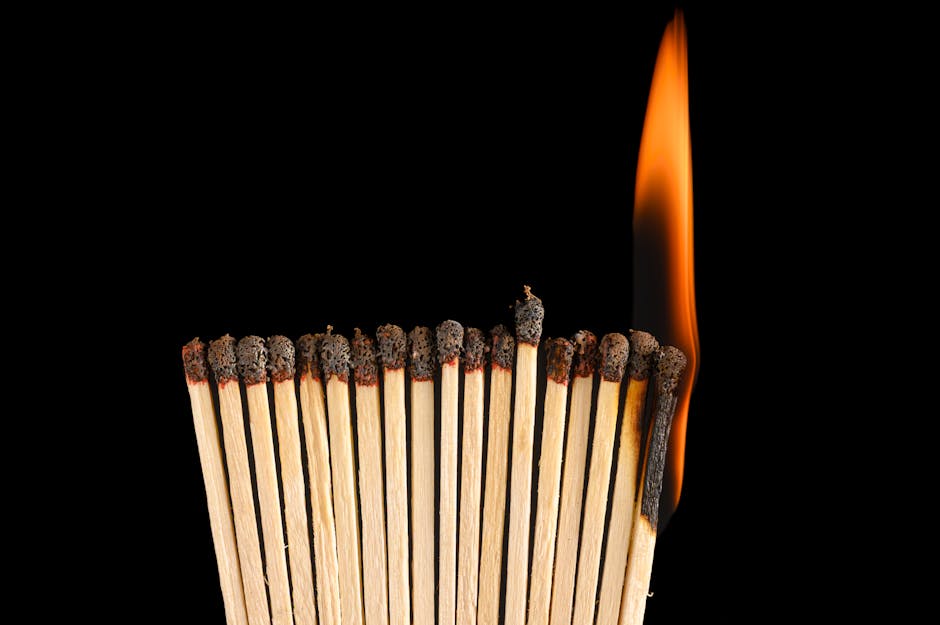
To understand SHC, it helps to know a bit about how fire works. Human bodies are mostly water (about 60% on average) so they’re not exactly kindling. However, our bodies also contain fat, which can burn under the right conditions. For a body to catch fire and burn extensively, three things are needed:
- Fuel: Something to burn (in this case, body fat).
- Oxygen: To sustain combustion.
- Heat: An ignition source hot enough to start the process.
This is known as the “fire triangle.” Remove any one side, and fire simply won’t happen. In most SHC stories, no obvious ignition source is found, or at least, not reported. That’s where things get interesting.
The Wick Effect: A Plausible Explanation
One of the most widely accepted scientific theories for alleged SHC cases is called the “wick effect.” Imagine a candle: the wick draws up melted wax (fuel), which burns steadily. In a similar way, if a person’s clothing catches fire (perhaps from a dropped cigarette or a spark) the fabric can act as a wick, drawing melted body fat into itself and sustaining a slow, smoldering burn.
Experiments have shown that under certain conditions, a body can burn for hours at relatively low temperatures, reducing much of the flesh and bone to ash while leaving nearby objects largely unharmed. This explains why so many SHC victims are found in armchairs or beds, places where they might fall asleep with a cigarette or be unable to respond quickly to a small fire.
| Case | Year | Key Details | Likely Cause |
|---|---|---|---|
| Mary Reeser | 1951 | Body almost entirely cremated; chair mostly intact | Cigarette + Wick Effect |
| Henry Thomas | 1980 | Lower legs and feet untouched; rest reduced to ash | Cigarette + Wick Effect |
| Jeannie Saffin | 1982 | Burst into flames in kitchen; survived briefly | Open flame (possible match or stove) |
These real-world examples have been studied by forensic investigators and documented in sources like Britannica and Scientific American. In each case, investigators found plausible sources of ignition and evidence supporting the wick effect rather than true spontaneous combustion.
Common Threads in SHC Reports
If you look closely at SHC stories from around the world, some patterns start to emerge. Most victims are elderly or have limited mobility. Many lived alone and were smokers or heavy drinkers. Alcoholism is frequently mentioned in historical accounts, likely because intoxication makes people less aware of danger and slower to react to accidents.
- Lifestyle factors: Smoking in bed or while sitting in an armchair is a common theme.
- Isolation: Victims are often alone for hours before being discovered.
- Physical limitations: Reduced mobility can make it difficult to escape or extinguish a small fire.
- Clothing: Loose or absorbent fabrics can act as wicks for burning fat.
This doesn’t mean SHC is just an old person’s problem, it’s more about circumstances that make an undetected fire more likely. The combination of an ignition source (like a cigarette), clothing that can absorb melted fat, and enough time for the fire to burn undisturbed creates the perfect storm for what appears to be spontaneous combustion.
The Role of Myth and Media
It’s no surprise that SHC stories have captured public imagination for centuries. The idea taps into deep fears about losing control over our bodies and being consumed by forces we don’t understand. Sensational media coverage has played a big role in keeping these stories alive. Newspapers from the 1800s loved nothing more than a good mystery, especially one involving fire and death.
Even today, TV shows and documentaries revisit SHC cases with dramatic reenactments and ominous music. But when you peel back the layers of myth and look at the evidence, most cases turn out to be tragic accidents rather than unsolved mysteries. As Dr. John deHaan, a leading fire investigator, demonstrated in his experiments (detailed in his book “Kirk’s Fire Investigation”), pork tissue wrapped in cloth burned in a way remarkably similar to reported SHC cases, without any supernatural intervention.
What Should We Believe?
The allure of spontaneous human combustion lies in its mystery, but science has chipped away at that mystery with careful investigation and experimentation. While there’s no credible evidence that people can burst into flames without an external ignition source, there are plenty of ways for unnoticed fires to start and burn under specific conditions that mimic what’s described in SHC stories.
If you take one thing away from all this, let it be that most SHC cases are explainable through known physical processes (especially the wick effect) and lifestyle factors play a significant role. The real lesson here isn’t about supernatural dangers lurking in our living rooms; it’s about fire safety and awareness. If you smoke or live with someone who does, be extra cautious with open flames, especially around flammable fabrics and when alone or sleepy.
The next time you hear a story about someone mysteriously bursting into flames, remember: science may not always have all the answers right away, but it has a pretty good track record of turning mysteries into manageable facts. And sometimes, that’s even more fascinating than fiction.
References:
- Britannica – Spontaneous Human Combustion
- Scientific American – Can People Spontaneously Burst Into Flames?
- Kirk’s Fire Investigation by John D. DeHaan (Academic Press)
- National Center for Biotechnology Information (NCBI) – Spontaneous Human Combustion: A Case Report