Cryptids in the Modern Age: New Evidence for Bigfoot and Beyond
Cryptids have always occupied a fascinating corner of our collective imagination. From the dense forests of the Pacific Northwest to the misty highlands of Scotland, stories of elusive creatures like Bigfoot and the Loch Ness Monster have persisted for generations. But what happens when these legends collide with modern technology and scientific scrutiny?
The Evolving World of Cryptozoology
Once dismissed as mere folklore, cryptozoology (the study of animals whose existence is unsubstantiated) has found new life in the digital age. Today, enthusiasts and researchers alike wield tools that would have seemed like science fiction to early monster hunters. High-resolution trail cameras, drone surveillance, and environmental DNA (eDNA) sampling are now part of the cryptid investigator’s toolkit.
Consider the case of Bigfoot. In the past, evidence was limited to blurry photographs and anecdotal accounts. Now, organizations like the Bigfoot Field Researchers Organization systematically collect and analyze reports, using mapping software to identify patterns and hotspots. Meanwhile, recent advances in eDNA allow scientists to test soil and water samples for traces of unknown species, offering a non-invasive way to hunt for elusive creatures.
Bigfoot: New Evidence and Renewed Debate
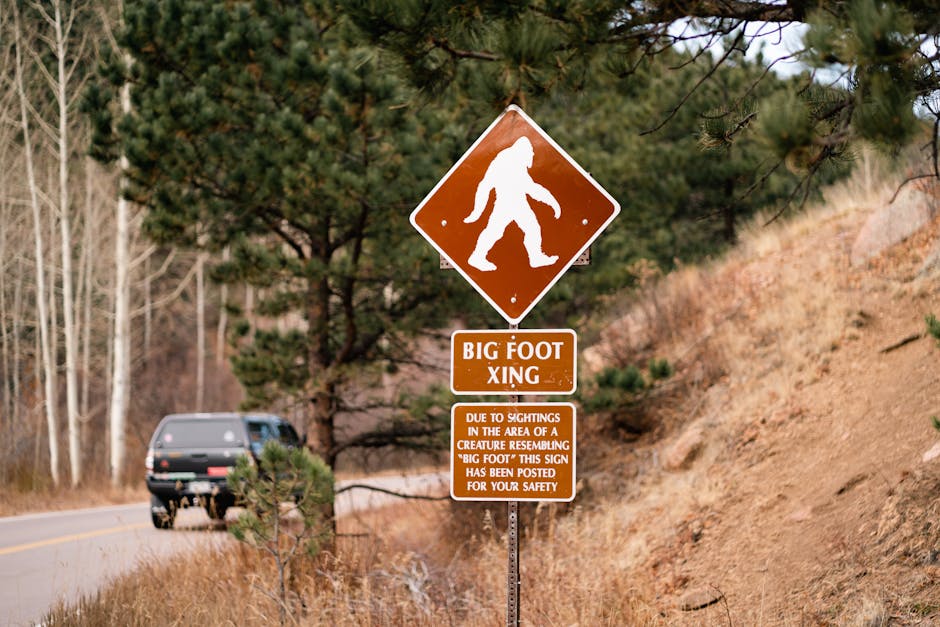
No discussion of modern cryptids would be complete without addressing Bigfoot. The legend stretches back centuries, with indigenous oral histories describing large, hairy bipeds long before the term “Bigfoot” entered popular culture. But it’s the recent surge in technology-driven evidence that has reignited debate among skeptics and believers alike.
In 2023, a team from Idaho State University led by Dr. Jeffrey Meldrum conducted an extensive eDNA survey in the Blue Mountains. Their findings included unidentified primate DNA sequences that didn’t match any known local wildlife. While not definitive proof of Bigfoot, these results have prompted calls for further investigation by mainstream scientists (National Geographic).
Let’s break down some of the most talked-about forms of Bigfoot evidence:
| Type of Evidence | Description | Recent Example |
|---|---|---|
| Footprints | Large, human-like tracks found in remote areas | 2022: 16-inch tracks discovered in Washington State |
| Audio Recordings | Unexplained howls, knocks, or vocalizations | 2021: Sierra Sounds analyzed by acoustic experts |
| eDNA Sampling | Genetic material collected from soil/water | 2023: Unidentified primate DNA in Idaho forests |
| Photographs/Videos | Images or footage captured on trail cams or phones | 2020: Alleged Bigfoot video from Oregon wilderness |
Beyond Bigfoot: Other Cryptids Enter the Spotlight
While Bigfoot often steals the limelight, other cryptids are also being re-examined through a modern lens. Take the Loch Ness Monster, affectionately known as “Nessie.” In 2019, a team led by Professor Neil Gemmell at the University of Otago conducted one of the largest eDNA surveys of Loch Ness to date. Their research didn’t find evidence for a prehistoric reptile but did reveal an abundance of eel DNA, fueling speculation that Nessie sightings could be explained by unusually large eels (BBC News).
Other cryptids gaining attention include:
- Mokele-mbembe: A dinosaur-like creature reported in the Congo Basin. Recent drone footage has sparked renewed interest among biologists.
- Chupacabra: Sightings across the Americas continue, with DNA testing often revealing misidentified canines suffering from mange.
- Yeti: Himalayan expeditions have uncovered hair samples that, when analyzed, frequently turn out to be from bears or yaks, but not always.
The Role of Technology and Citizen Science
If you’ve ever watched a nature documentary filmed with night-vision cameras or drones, you already know how much technology has changed wildlife research. The same is true for cryptid investigations. Today’s enthusiasts aren’t just wandering through forests with flashlights, they’re deploying motion-activated cameras, collecting hair samples for genetic analysis, and sharing findings instantly via social media.
This democratization of research has led to a surge in credible data and collaboration between amateurs and professionals. Platforms like iNaturalist allow users to upload photos and audio recordings for expert identification. In some cases, this crowdsourced approach has even led to the discovery of previously unknown animal species, reminding us that nature still holds surprises.
Skepticism, Science, and Why Cryptids Still Matter
It’s easy to dismiss cryptid hunting as a quirky hobby or a relic of pre-scientific thinking. But there’s value in keeping an open mind, provided we apply rigorous standards of evidence. After all, history is full of animals once considered mythical: the okapi was “Africa’s unicorn” until its discovery in 1901; the coelacanth was thought extinct for millions of years before fishermen caught one off South Africa in 1938 (Smithsonian Magazine).
The search for cryptids often leads to real scientific discoveries about our environment and biodiversity. Even when a legendary creature turns out to be a misidentified bear or a giant eel, we learn more about the natural world and about ourselves. Our fascination with the unknown drives curiosity, innovation, and sometimes even conservation efforts in remote habitats.
So whether you’re a diehard believer or a cheerful skeptic, it’s hard to deny that cryptids continue to captivate us in an age dominated by data and technology. The line between myth and reality is blurrier than ever and perhaps that’s exactly where the magic lies.
- References:
- Bigfoot Field Researchers Organization (bfro.net)
- National Geographic (nationalgeographic.com)
- BBC News (bbc.com)
- Smithsonian Magazine (smithsonianmag.com)
- iNaturalist (inaturalist.org)