Exploring Quantum Theories in Paranormal Claims
Quantum physics has long fascinated both scientists and the public, not only for its complex mathematics but also for the philosophical questions it raises about reality. Over the past few decades, some proponents of paranormal phenomena have turned to quantum theories to explain experiences that seem to defy conventional scientific understanding. From claims of telepathy to ghost sightings, quantum mechanics is often invoked as a possible mechanism behind these mysterious events. While mainstream physicists remain skeptical, the intersection between quantum theory and paranormal claims continues to generate debate, curiosity, and sometimes confusion. Understanding this relationship requires a careful look at both the scientific foundations of quantum mechanics and the ways these ideas are interpreted (or misinterpreted) by those exploring the paranormal.
Quantum Mechanics: The Basics and Their Appeal
Quantum mechanics describes the behavior of matter and energy at the smallest scales, such as atoms and subatomic particles. Unlike classical physics, which deals with predictable outcomes, quantum theory introduces concepts like superposition, entanglement, and uncertainty. These principles challenge our everyday notions of cause and effect, making quantum mechanics both intriguing and difficult to grasp.
One reason quantum theory is so often linked to paranormal claims is its reputation for strangeness. For example, the phenomenon of entanglement (where two particles become linked so that the state of one instantly influences the other, even across great distances) has been cited as a possible explanation for telepathy or psychic connections. However, physicists emphasize that entanglement does not allow for information to travel faster than light or for minds to communicate directly without physical interaction.
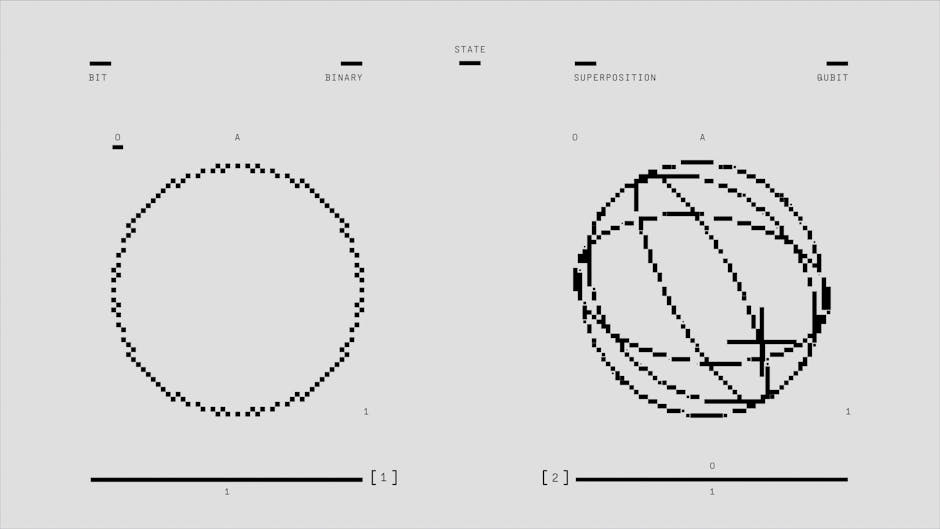
The uncertainty principle, which states that certain pairs of properties (like position and momentum) cannot be precisely measured at the same time, is sometimes invoked to suggest that reality itself is fluid or observer-dependent. This has led some paranormal enthusiasts to argue that consciousness can shape reality, a claim not supported by mainstream science but popular in books and media.
Quantum mechanics’ mathematical complexity and counterintuitive results make it ripe for misinterpretation outside academic circles. As a result, many people conflate genuine quantum effects with speculative ideas that lack empirical support. This blending of science and speculation is a key reason why quantum theories are frequently referenced in discussions about the paranormal.
Paranormal Claims Through a Quantum Lens
The use of quantum language in paranormal circles often centers on phenomena that resist easy explanation. Ghost sightings, telekinesis, remote viewing, and near-death experiences are just a few examples where quantum theories are cited as possible mechanisms. Proponents argue that if particles can be in multiple states at once or communicate instantaneously across space, perhaps similar processes could explain human experiences that seem impossible under classical physics.
For instance, some claim that ghosts might be manifestations from parallel universes or alternate realities, drawing on the many-worlds interpretation of quantum mechanics. Others suggest that consciousness itself is a quantum phenomenon, capable of existing independently from the brain or interacting with physical matter in unusual ways. These ideas are compelling but remain speculative without direct experimental evidence.
Critics point out that while quantum mechanics does allow for strange effects at microscopic scales, these do not translate directly to the macroscopic world we inhabit. The rules governing atoms and photons do not apply in the same way to people or everyday objects. As physicist Sean Carroll notes in interviews with Scientific American, “Quantum mechanics is not magic; it’s a set of rules that describe how things behave at very small scales.”
Despite skepticism from the scientific community, the blending of quantum theory with paranormal claims persists in popular culture. This is partly because quantum mechanics provides a vocabulary for discussing mysteries that traditional science struggles to address. It also reflects a broader human desire to find meaning in unexplained experiences.
Evaluating Evidence: Science Versus Speculation
When examining paranormal claims through a scientific lens, it’s important to distinguish between established facts and speculative ideas. Quantum mechanics has been tested extensively in laboratories and forms the basis for technologies like lasers and semiconductors. Paranormal phenomena, by contrast, often rely on anecdotal reports or subjective experiences that are difficult to verify.
Researchers have attempted to investigate claims like telepathy or psychokinesis using controlled experiments. Most studies have found no statistically significant evidence supporting these phenomena under rigorous conditions. For example, a meta-analysis published in Nature reviewed decades of parapsychology research and concluded that positive results could be attributed to methodological flaws or statistical anomalies rather than genuine effects.
Quantum biology is an emerging field exploring whether quantum effects play a role in biological processes such as photosynthesis or bird navigation. While this research is promising, it does not provide support for paranormal claims involving human consciousness or supernatural abilities. The leap from quantum effects in molecules to psychic phenomena remains unsupported by empirical data.
To clarify how quantum theory is used (and misused) in discussions about the paranormal, consider this comparison:
| Quantum Physics | Paranormal Claims |
|---|---|
| Describes subatomic particles’ behavior | Invoked to explain telepathy or ghosts |
| Tested through repeatable experiments | Based on anecdotal evidence |
| Supports modern technology (e.g., MRI) | No direct technological applications |
| Subject to peer review and falsification | Often lacks rigorous scientific scrutiny |
The Human Element: Why Quantum Explanations Persist
The persistence of quantum explanations in paranormal discussions speaks to deeper psychological and cultural factors. People are naturally drawn to stories that offer hope or mystery, especially when they touch on questions about life after death or hidden abilities. Quantum theory’s reputation for weirdness makes it an appealing framework for exploring these topics.
Media coverage often amplifies speculative connections between quantum physics and the paranormal. Books like “The Secret” and movies such as “What the Bleep Do We Know!?” have popularized the idea that thoughts can influence reality through quantum processes. While entertaining, these portrayals rarely reflect current scientific understanding.
- Mystery: Quantum mechanics provides language for discussing unknowns.
- Authority: Scientific terminology lends credibility to extraordinary claims.
- Hope: Quantum ideas offer possibilities beyond conventional explanations.
- Cultural resonance: Popular media reinforces these associations.
I’ve encountered many people who genuinely believe their experiences have a scientific basis because they’ve read about quantum entanglement or observer effects online. In conversations with physicists during academic conferences, I’ve learned that most experts are sympathetic but cautious, they understand why people seek out these explanations but stress the importance of distinguishing between metaphor and measurable fact.
This ongoing dialogue between science and belief highlights both the power and limitations of using quantum theory as a catch-all explanation for the unexplained. It also underscores the need for critical thinking when evaluating extraordinary claims.
The intersection of quantum theories and paranormal claims remains a source of fascination and debate. While quantum mechanics revolutionized our understanding of nature at its smallest scales, its application to paranormal phenomena is largely speculative and unsupported by current evidence. Still, the conversation continues because it taps into fundamental human desires for wonder and meaning. Exploring these ideas with curiosity and skepticism can enrich our appreciation for both science and mystery and perhaps inspire deeper inquiry into what we truly know about reality.